Taiji (Tai Chi): Ancient Wisdom in Motion for Modern Well-Being
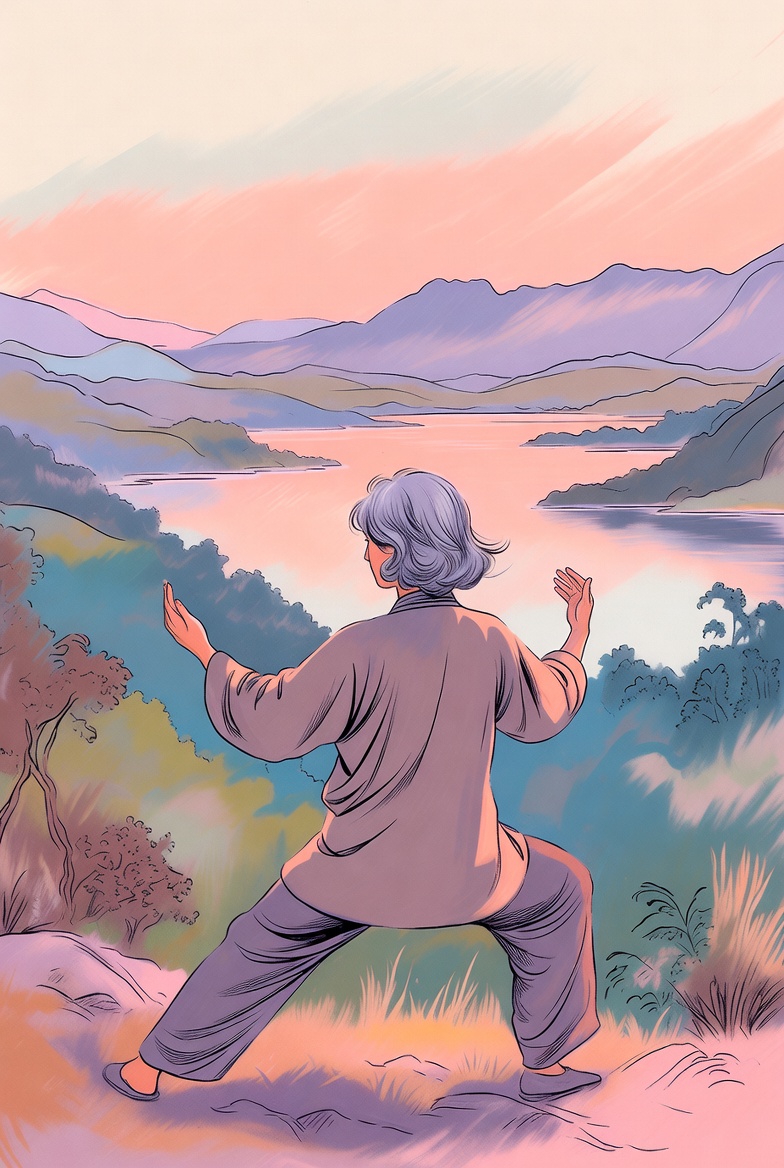
Taiji, more commonly known as Tai Chi or Taijiquan ("Supreme Ultimate Fist"), is a graceful Chinese martial art that combines slow, flowing movements with deep breathing, mindfulness, and meditation. Originally developed for self-defense, it has evolved into a widely practiced form of exercise valued for its profound health benefits, stress reduction, and spiritual depth. Today, millions practice it worldwide, from serene park settings to clinical programs addressing specific health conditions.
Philosophical Foundations: Daoism, Yin and Yang, and the I Ching
At its core, Taiji is inseparable from ancient Chinese philosophy, particularly Daoism (Taoism). Daoist teachings, as expressed in the Tao Te Ching by Lao Tzu, emphasize living in harmony with the natural flow of the universe, or the Dao (the Way). Principles like wu wei (effortless action) and yielding rather than forcing mirror Taiji's emphasis on softness overcoming hardness—using relaxed, circular movements to redirect force rather than meeting it head-on.
Central to this is the concept of Yin and Yang, the complementary opposites that represent the dynamic balance of all things: dark and light, passive and active, soft and firm. The Taiji symbol (Taijitu) visually depicts this interplay, with each side containing a seed of the other, illustrating that extremes transform into their opposites. In practice, Taiji movements embody this by continuously shifting weight, opening and closing the body, and alternating between yielding (Yin) and asserting (Yang). The term "Taiji" itself refers to the "Supreme Ultimate"—the primordial state from which Yin and Yang arise out of Wuji (the void or undifferentiated state).
The I Ching (Book of Changes), one of China's oldest texts, further underpins Taiji philosophy. It explores the nature of change through 64 hexagrams derived from eight trigrams (Bagua), which correspond to natural forces and directions. Taiji's "Thirteen Postures" directly draw from these: the eight gates or energies align with the trigrams, while the five steps (or directions) complete the system. Practitioners learn to flow with inevitable change, cultivating adaptability and inner equilibrium.
Traditional Forms and the Thirteen Postures
Traditional Taiji encompasses several family styles that evolved over centuries, with roots often traced (legendarily) to figures like the Daoist immortal Zhang Sanfeng. The major styles include:
- Chen style — The oldest, featuring explosive power (fa jin), low stances, and alternating slow and fast movements.
- Yang style — The most popular globally, known for its large, slow, expansive, and relaxed movements, making it highly accessible.
- Wu, Sun, and Hao (Wu/Hao) styles — Each with unique characteristics, such as Sun style's agile, lively steps combining elements from other internal arts.
Traditional long forms can include 88 to over 100 movements and take 20–40 minutes or more to perform. These sequences train coordination, balance, internal energy (qi), and martial applications.
A foundational element across styles is the Thirteen Postures (or Thirteen Energies), considered the essence of Taiji. These comprise:
- Eight Gates (or Hands): Peng (ward-off), Lu (rollback), Ji (press), An (push), Cai (pluck), Lie (split), Zhou (elbow), Kao (shoulder/body lean).
- Five Steps (or Directions): Forward, backward, left, right, and center (fixed/rooted stance).
Mastering these builds the principles of rootedness, whole-body connection, and responsive movement that define authentic Taiji.
Modern Short Forms: Accessibility for All
In the 20th century, especially after the founding of the People's Republic of China, simplified forms emerged to promote health and make Taiji more approachable. These shorter sequences preserve core principles while reducing complexity.
Yang 10 Form (sometimes called Yang 8 or 10 Posture Form) is a compact beginner-friendly routine developed in the late 1990s/early 2000s, often for competition grading or introductory practice. It distills essential Yang-style movements (like Commencing Form, Repulse Monkey, Brush Knee, and Part the Wild Horse's Mane) into about 10 postures, typically practiced on both sides. It serves as an excellent gateway to longer forms.
Dr. Paul Lam's condition-specific forms stand out for their evidence-based, health-focused design. An Australian family physician and Taiji master, Dr. Lam created programs like Tai Chi for Arthritis (based on Sun style for its mobility benefits and qigong elements), Tai Chi for Diabetes, Tai Chi for Heart Conditions, and others. These include warm-ups, core movements, and adaptations for different abilities, often incorporating the popular 24 Form or elements of the 42 Combined Form. His work reaches millions and is backed by clinical research showing improvements in pain, balance, and overall wellness.
Dr. Roger Jahnke's Tai Chi Easy and Integral Tai Chi prioritize simplicity and integration with qigong. Through the Institute of Integral Qigong and Tai Chi, Dr. Jahnke (a doctor of Oriental Medicine) developed Tai Chi Easy™ (5 form) as an accessible entry point—short, enjoyable sequences that anyone can learn quickly, emphasizing healing, relaxation, and "turning on the healer within." Integral Tai Chi (9 form) blends mind-body practices for deeper personal and therapeutic use, making it ideal for wellness programs in hospitals and communities.
Harvard Medical School's Tai Chi exercises and elements reflect the growing scientific recognition of the practice. Courses and resources, such as "Introduction to Tai Chi," feature standing and seated calisthenics, traditional elements, and guided routines. Researcher Dr. Peter Wayne outlines "eight active ingredients" that explain its benefits: awareness, intention, structural integration, active relaxation, strengthening and flexibility, natural breathing, social support, and embodied spirituality/mindfulness. These programs adapt Taiji for diverse populations, including older adults and those with limited mobility.
Tai Chi Bafa Wubu is a modern short form created to distill the essence of traditional Taijiquan into a concise, teachable practice that preserves classical theory while meeting contemporary needs. It was officially standardized in 2016 by the Chinese Wushu Association, drawing directly from Yang-style Taiji principles and classical writings, with the explicit purpose of making authentic Tai Chi more accessible, systematic, and easy to transmit—especially for education, rehabilitation, and public health. Bafa (Eight Methods) refers to the eight fundamental energies—Peng (ward off), Lü (roll back), Ji (press), An (push), Cai (pluck), Lie (split), Zhou (elbow), and Kao (shoulder)—which correspond to the Eight Trigrams (Bagua) of the I Ching, expressing dynamic transformations of yin and yang. Wubu (Five Steps) represents the foundational footwork—advance, retreat, look left, gaze right, and central equilibrium—linked to the Five Phases (Wu Xing) of the I Ching: wood, fire, earth, metal, and water. Together, Bafa Wubu unites movement, intention, and philosophy into a compact form that embodies Tai Chi’s classical cosmology while functioning as a bridge between traditional martial theory and modern practice.
Benefits and the Timeless Appeal of Taiji
Practitioners of all forms report improved balance, flexibility, strength, cardiovascular health, reduced stress and anxiety, better sleep, and enhanced mental clarity. Modern research supports these claims, positioning Taiji as a low-impact, mind-body intervention suitable for chronic conditions, fall prevention, and healthy aging.
Whether in a traditional long form practiced at dawn or a short, condition-specific routine in a community center, Taiji remains a living bridge between ancient Daoist wisdom and contemporary health needs. Its emphasis on balance—physical, energetic, and philosophical—offers profound lessons for navigating life's changes.
If you're new to Taiji, start with a short form or class guided by a qualified instructor. The journey begins with a single, mindful movement, leading toward greater harmony within and with the world around you.
Links and Resources
- World Tai Chi Day was founded by Bill Douglas and Angela Wong Douglas. Their website is a great resource for learning both tai chi and qigong and for participating in the community of practitioners worldwide. Bill Douglas has also written a number of books on tai chi and its benefits.
- The Qigong Institute has a wonderful Introduction to Tai Chi page.
- Harvard Medical School offers an Introduction to Tai Chi course.
- Published in 2013, The Harvard Medical School Guide to Tai Chi is still an invaluable reference to taiji today.
- Dr. Paul Lam's Tai Chi for Health Institute provides much information about tai chi in general. His programs are offered online or you can search for an instructor near you.
- You can find a certified instructor of Tai Chi Easy or Integral Tai Chi at the Institute for Integral Qigong and Tai Chi website.
- Dr. Andrew von Plitt, ND has created a playlist demonstrating and teaching the Yang 10 form. He has a separate Yang 24 Form playlist.